Your study environment is either working for you or against you. There's no neutral. Every element of your space — the lighting, the noise level, the desk surface, the proximity of your phone, the temperature — shapes your ability to focus, retain information, and sustain effort. This guide covers how to design a home study space that supports deep work, covering desk setup, lighting science, noise management, digital boundaries, and routine triggers. It complements the focus and distraction techniques in our library of study skill guides.
After helping hundreds of students troubleshoot their study habits, I've found that roughly a third of "focus problems" are actually environment problems. Fix the environment, and the focus often fixes itself.
The single-purpose principle
The most important rule for a home study space: don't use it for entertainment.
Your brain forms context-dependent associations. If you sit at your desk to study, watch shows, browse social media, and play games, your brain doesn't know which mode to activate when you sit down. The associations compete.
If possible, dedicate a specific space — even a specific chair — to study only. When you sit there, your brain should associate it with focused work and nothing else.
Research by Godden and Baddeley (1975) demonstrated that information learned in a specific context is recalled better in that same context. This extends to your study environment: a consistent study space creates a retrieval advantage.
What if you don't have a dedicated space?
Not everyone has a spare room. If you study at the kitchen table or on a shared desk:
- Use a specific physical cue to signal "study mode" — a desk lamp you only turn on when studying, a specific placemat, or headphones
- When study time is over, remove the cues
- This creates a psychological boundary even without a physical one
Desk setup essentials
Clear surface, clear mind
Before each study session, clear your desk to only:
- The materials for this session (textbook, notebook, pen)
- Your water bottle
- Nothing else
Everything else goes in a drawer or off the desk. Visual clutter competes for attention. A 2011 study by McMains and Kastner at Princeton found that visual clutter reduces the brain's ability to focus and process information.
Monitor and screen position
If you study on a computer:
- Top of the screen at eye level (use a stand or stack of books if needed)
- Screen at arm's length distance
- Single monitor or single window — full-screen the application you're working in
If you study from physical textbooks:
- Use a book stand or prop the textbook at an angle. Flat-on-desk reading strains the neck and promotes slouching.
Chair and posture
- Feet flat on the floor
- Back supported
- Shoulders relaxed, not hunched
- Elbows at roughly 90 degrees when writing or typing
A bad chair will limit your study time more than a bad textbook. If you can't invest in an office chair, a firm cushion on a dining chair is better than a soft couch.
Lighting: the overlooked performance factor
Lighting has a measurable effect on alertness, mood, and eye strain.
For daytime study:
- Natural light from a window is ideal — sit near one if possible
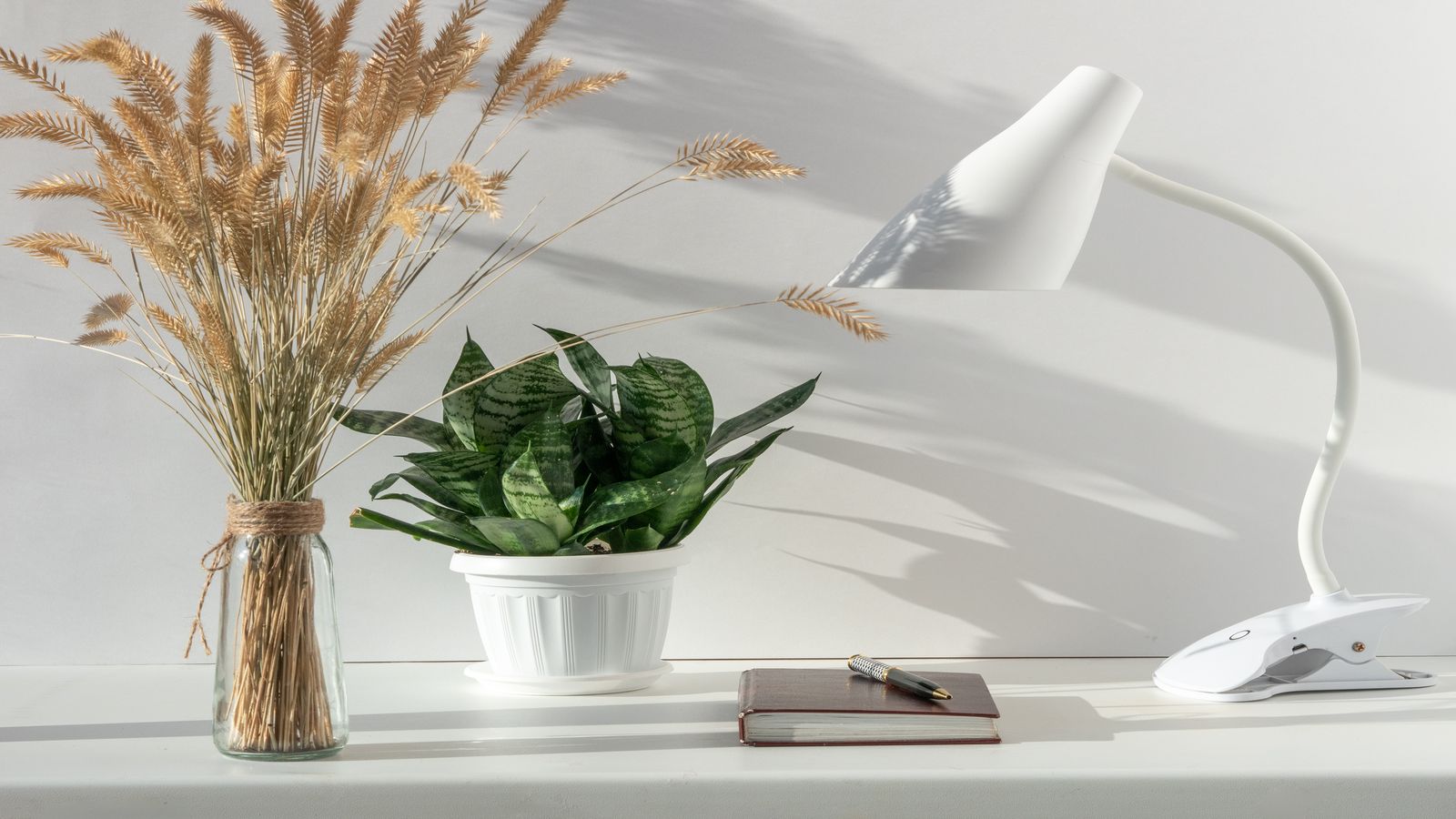
- Supplement with a desk lamp to eliminate shadows on your work surface
- Avoid having a bright window directly behind your screen (creates glare and eye fatigue)
For evening study:
- Use a cool-white desk lamp (4000K–5000K colour temperature) for alertness
- Overhead room lighting should be on to reduce contrast between your screen/page and the surrounding area
- Avoid warm, dim lighting — it signals relaxation to your brain
The blue light question
Blue light from screens is often blamed for sleep problems, but the research is more nuanced than the marketing suggests. The bigger issue is screen stimulation close to bedtime, not the specific wavelength. If you study on a screen in the evening, stop at least 30 minutes before sleep and dim your screen brightness.
Noise management
Silence vs. background noise
Research is split because people are different:
- Silence works best for tasks requiring heavy reading comprehension and complex problem-solving
- Consistent, low-level background noise (white noise, rain sounds, coffee shop ambience) can help some people by masking unpredictable disruptions
- Music with lyrics consistently impairs reading and writing tasks because it competes for language processing
Practical solutions:
- Noise-isolating headphones (not noise-cancelling — though those work too) reduce ambient noise significantly
- White noise generators (apps or devices) create a consistent sound floor that masks conversations and traffic
- Communicate boundaries: If you share a space, let housemates/family know your study schedule and ask for quiet during those times. A simple sign on your door works.
- If all else fails, relocate. A library is optimised for quiet study. Use it.
Digital boundaries
Your phone is the single biggest environmental threat to study focus.
The phone protocol:
- Phone goes in another room during study sessions. Not face-down. Not on silent. In another room.
- If that's not possible (you need it for a timer or specific app), put it in airplane mode or "do not disturb" mode
- Disable all notifications except calls from people who might genuinely need you in an emergency
Computer boundaries:
- Close all tabs and applications not needed for the current session
- Use a website blocker during study blocks
- Turn off desktop notifications for email and messaging apps
Routine triggers: training your brain to focus on cue
A routine trigger is a short, consistent pre-study ritual that tells your brain "we're switching to focus mode now." It doesn't need to be elaborate.
Example routine (takes 60 seconds):
- Fill your water glass
- Clear your desk
- Turn on your desk lamp
- Put on your headphones
- Open your study materials
- Write your session goal on paper
After a few weeks of using the same routine, your brain starts the transition to focus mode as soon as the routine begins. This is classical conditioning applied to productivity — Pavlov's desk, if you will.
Do this today
- [ ] Clear your desk right now. Remove everything that isn't study-related.
- [ ] Check your lighting: is there a desk lamp? Is it cool-white?
- [ ] Decide where your phone will live during study sessions (another room is best)
- [ ] Create a 60-second pre-study routine and write it down
- [ ] Try our Distraction Audit to score your current environment
- [ ] Identify one change you can make today that would improve your study space
Common mistakes I see
"I study on my bed." Your bed is for sleeping. Studying in bed trains your brain to associate bed with wakefulness (hurting sleep quality) and to associate studying with drowsiness (hurting study quality). It's a lose-lose.
"I need background TV for company." TV is unpredictable stimulation — volume changes, dialogue, visual movement. It consistently underperforms white noise or silence for focus. If you need "company," try ambient sound.
"I'll study in the living room while everyone watches TV." This almost never works. You need a space where you control the noise level. If that means studying in a bedroom, at a library, or wearing noise-isolating headphones, do that.
"My desk is fine — it's just a bit cluttered." A "bit" cluttered is still competing for your attention. Try one session with a completely clear desk and notice the difference.
Frequently asked questions
Do I need a separate room for studying?
No. A dedicated corner of a room works if you can establish consistent cues (desk lamp, specific position, headphones). The key is the association between the space and the activity, not the square footage.
How much should I spend on a desk setup?
You don't need to spend much. The basics: a stable surface, a decent chair, and a desk lamp. Everything else is optional. A clean, well-lit kitchen table outperforms an expensive desk in a dark, noisy room.
Should I study at home or at a library?
Both can work. Libraries offer quiet and social accountability. Home offers convenience and customization. Many students find a mix effective — home for solo study, library for long sessions or when home is too distracting.
What temperature is best for studying?
Research suggests 20–22°C (68–72°F) is optimal for most cognitive tasks. Too warm makes you drowsy; too cold makes you distracted by discomfort. Layer clothing rather than overheating the room.